India has warned Pakistan against its unprovoked firings along the Line of Control (LoC) in Jammu and Kashmir as the directors general of military operations of the two armies spoke on the hotline amid the escalating tensions over the Pahalgam terror attack.
Sharif said that the US president had shown beyond any doubt that "he is a man for peace... and beneficial business deals".

Tharoor said his remarks were preceded by a reference to the several attacks that have taken place in recent years alone, during which previous Indian responses were both restrained and constrained by India's responsible respect for the LoC and the IB.

The Pakistani military fired unprovoked shots across the Line of Control (LoC) in Kashmir for a second consecutive night, triggering retaliatory action from Indian troops. This escalation follows heightened tension between India and Pakistan after the Pahalgam terror attack that killed 26 civilians. Despite the exchange of fire, no casualties were reported. India has imposed a series of punitive measures in response to the attack, including the suspension of the Indus Waters Treaty and closing the Attari land-border crossing. Pakistan has responded in kind, closing its airspace to Indian airlines and suspending trade with India.

The Director General of Air Operations said "whatever methods and whatever means we have chosen, it had the desired effects on the enemy targets",

The slippage in the delivery schedule for the LCA Mk-1A variant of the jet had become a major issue with Chief of Air Staff Air Chief Marshal A P Singh raising the matter publicly.
Defence Minister Rajnath Singh on Thursday questioned the safety of nuclear weapons in the hands of Pakistan, and said they should be taken under monitoring of the International Atomic Energy Agency.

India on Saturday said it was deeply concerned over the 'evolving escalation' in West Asia and urged all sides to exercise restraint and return to the path of dialogue and diplomacy.

Singh reached Udhampur on a two-day visit on Friday, his second trip to Jammu and Kashmir post-Operation Sindoor. He visited Kashmir on May 15, days after India and Pakistan reached an understanding to stop military actions against each other.
S&P Global Ratings on Thursday said the hostilities between India and Pakistan heighten risks to the credit metrics of both countries, and any escalation in clashes would put downward pressure on sovereign credit support.
Trump said that leaders in India and Pakistan are "great leaders" and "they understood, and they agreed, and that all stopped".
President Trump says the US is close to a trade deal with India, while also claiming to have stopped a war between India and Pakistan.

Mohammad Javad Hosseini, the deputy chief of mission at the Iranian embassy, said more evacuation flights could be operated in the coming days to bring back Indians if required.

Pakistan's former foreign minister Bilawal Bhutto-Zardari on Monday said his country will go to war if India denies Islamabad its fair share of water under the Indus Waters Treaty (IWT).

'Still, people are asking why we have not gone for a full-out war. As a military man, if ordered, I will go to war, but that will not be my first choice'
In the India-Pakistan situations, off-ramps have come either through foreign mediation (after months of kinetic warfare over Kargil, and a long stand-off with Op Parakram) or when a situation made it possible for both sides to claim a win, explains Shekhar Gupta.
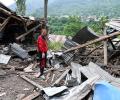
Drones were sighted and explosions were heard in Jammu and Kashmir on Friday, a day after India thwarted attempts by the Pakistan military to attack Indian military installations using drones and missiles. The drones were also engaged in Udhampur and Nagrota of Jammu and Punjab. Heavy cross-border shelling started along the International Border in Suchetgarh and Ramgarh sectors of Jammu and Samba districts. Chief Minister Omar Abdullah appealed to residents to stay indoors and ignore rumors.
'The Pakistani State has to realise that the pigeons have come home to roost.'

Operation Sindoor is not just a name but India's latest policy against terror as it has set a new standard, a 'new normal' in counter-terrorism measures, Prime Minister Minister Narendra Modi asserted on Monday.
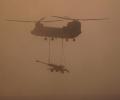
The Indian Air Force will carry out a two-day mega military exercise along the border with Pakistan from Wednesday that will involve all the frontline fighter jets including Rafale, Su-30 and Jaguar aircraft. The exercise is taking place amid heightened tensions between India and Pakistan over the April 22 Pahalgam terror attack that killed 26 people. India's civil aviation authorities have already issued a Notice to Airmen (NOTAM) for the major air exercise that will largely take place along the southern and western section of the Indo-Pakistan border. India's frontline fighter jets including the Rafale, Su-30 MKI, MiG-29, Mirage-2000, Tejas and AWACS (Airborne Warning and Control System) aircraft are set to feature in the exercise.

Terrorism is a global menace to be addressed by humanity in unison was the all-party delegation's message to Algeria as it concluded its visit to the North African country on Sunday.

While the Prime Minister did not spell out the details of the three instances, his remarks are being widely interpreted as a reference to the 2016 surgical strikes following the Uri terror attack, the 2019 Balakot air strikes after the Pulwama bombing, and the recent cross-border strikes as part of 'Operation Sindoor'.
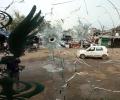
People in several districts of Punjab, Jammu and Kashmir and Gujarat spent an anxious night as authorities enforced blackouts amid heightened tension between India and Pakistan.

Jaishankar said such a description would be like putting the perpetrator and the victim of the Pahalgam attack at the same level.
'Had Haji Pir and/or Skardu been taken, the message would have gone out not just to General Asim Munir and his cohort in the Pakistan army but to the Pakistani people that every terrorist incident in India would lead to substantial loss of territory in PoK.'

The United States said it encourages 'direct communication' between India and Pakistan and commends Prime Minister Narendra Modi and Pakistan Prime Minister Shehbaz Sharif for choosing the path of peace.

There was no reference to trade in talks between top leaders of India and the United States during the India-Pakistan military conflict, government sources said on Monday after American President Donald Trump claimed that he pressured New Delhi and Islamabad to stop hostilities by threatening to cut trade with both countries.
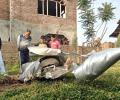
Metal debris was found scattered in three villages of Amritsar district, with some locals claiming them to be parts of missiles. Police are investigating the objects, while the Indian government claims to have foiled Pakistan military's attempts to attack 15 places in northern and western India using missiles and drones. Tensions between India and Pakistan have escalated after India launched missile strikes on terror targets in Pakistan and Pakistan-occupied Kashmir (PoK) in response to the April 22 killing of 26 people by terrorists in Kashmir's Pahalgam.
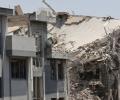
An inconclusive end to this war will pose high risk for Netanyahu of a cascading demand for a regime change in Israel, predicts Ambassador M K Bhadrakumar.
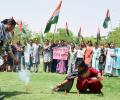
Opposition parties in India, including the Congress, Left parties, Samajwadi Party, Bahujan Samaj Party, Trinamool Congress, Dravida Munnetra Kazhagam, Rashtriya Janata Dal, Shiv Sena (UBT), and NCP (SP), have unanimously hailed the armed forces' "Operation Sindoor", a retaliatory strike against terrorist infrastructure in Pakistan and Pakistan-occupied Kashmir (PoK). The operation, which involved missile and drone strikes, was conducted in response to the April 22 Pahalgam terror attack. Despite political differences, all parties expressed support for the government and the armed forces, stressing the importance of national unity and integrity in the face of terrorism. While emphasizing the need for diplomatic avenues to prevent further escalation, some parties also called for caution in attributing political credit for the strikes.

External Affairs Minister S Jaishankar has said the recent confrontation between India and Pakistan was not just a mere conflict between two neighbours, but it was about combating terrorism, which will eventually come back to haunt the West.
'There is no independently verified imagery or battlefield evidence to support Pakistan's claim.'
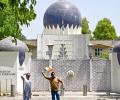
The ministry of external affairs said the official has been given 24 hours to leave the country.

The Pakistan Cricket Board (PCB) has decided to shift the remaining matches of the Pakistan Super League (PSL) to the UAE due to the ongoing military confrontation with India.
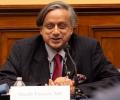
Tharoor said if Pakistan were to dismantle the infrastructure of terrorism, "we can talk to them".

The tensions between the two countries continue to remain high as several suspected drones launched from Lebanon were shot down by Israeli air defences on Sunday, the Israel Defence Forces (IDF) said.
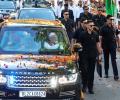
'It is important India to stay focussed on its primary national objectives: Combating terrorism; not losing sight of other security and strategic concerns (on the Sino-Indian front for instance); ensuring a strong economy and registering growth which includes improving the lot of common people; and finally making certain that the social fabric remains intact and harmony among people is not jeopardised, at least any further,' asserts Nilanjan Mukhopadhyay.
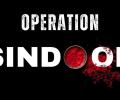
It was Prime Minister Narendra Modi who picked the evocative term 'Operation Sindoor' to codename the Indian armed forces' strikes on nine terror sites in Pakistan and Pakistan-occupied Kashmir, official sources said on Wednesday.
The ministry of external affairs said in a statement that the Indian embassy remains in touch with the community with a view to extend all feasible assistance.

Defence attaches of several major countries who are part of many international groupings, as also of several Islamic countries attended the briefing, sources said.
 © 2026 Rediff.com - Advertise with us - Disclaimer - Privacy Policy - Sitemap - Feedback - About us - Terms of use - Grievances